Tuesday, August 17, 2004


An Essay Point.

Around 2040, assuming people are still required to write essays (when I say 'write', I suppose I should say, 'compose') for whatever educational certificate that then operates, they will learn to regurgitate the small but significant fact that US troops, having been present in Europe in large numbers for 60 years, were drastically cut by President Bush jnr in 2004.

There are lots of consequences this might lead to.

It might accelerate the progress towards a European army, diminishing the status of national armies within Europe (almost a certainty, unfortunately).

It might increase the priority given to defence in European spending (unlikely, but an interesting possibility).

It might provoke some country or organisation to test European military resolve (this prospect is both frightening and, I'm a bit ashamed to say, exhilarating).

I don't want a European army, but I'd support Bush's move for several reasons.

One is that I think America should do what is best for itself, for a change. Only then will Europeans stop moaning about the US being selfish.

Secondly, if Europe wants to be 'fortress Europe', preserving its wealth through protectionism, then it had better get some soldiery to man the fort (at least to scare off extortioners). This will be very good for those who think we can be protectionist without a cost (as I believe many Europeans do).

Thirdly, I think this way we in Britain and people elsewhere in Europe will be confonted with the reality of pooled sovereignty, as we face a stark choice to donate our armed forces to the EU or to develop their compatibility and strength to complement the US army.

Mark Steyn has a trademark article expressing his satisfaction at the move. Highly recommended.

Stephen Pollard attacks the double standards of the Euro-Left in addressing military intervention.

Dr Richard North has some concrete observations about the US announcement. His message to our own politicians? Get real.

Monday, August 16, 2004


Sometimes One Could Weep-

The journalistic standard is so poor, not least at the BBC. Scratch a 'feature' article and you'll find your fingernails all mucky.

I haven't time or (truth be told) inclination to thoroughly eviscerate this obvious piece of rubbish from the BBC- hypnotised as they are by the Michael Moore phenomenon since he is the only person who outstrips them in their keenness to see GWB leave the Whitehouse.

There are, however, some basic points.

One is that one of their substantial vignettes of anti-Bush feeling in the US is over six weeks old- not much of a poll indicator. Here is the gist of their anecdote about cinema owners in the North Carolinan city of Fayetteville, posted at that link on 1st July.

Concerning this story, what is not pointed out by the BBC is that Fayetteville has five cinemas- and the one they feature, 'The Cameo', is an arthouse cinema. Moreover, 'The Cameo' was the only cinema in the town to show Fahrenheit 9/11, and Fayetteville is not, as the BBC say, a 'small town', since it has over 60,000 inhabitants in its own right.

Yes, it is near to Fort Bragg, but 51,000 people, mainly military, are employed at Fort Bragg (which describes itself as a 'major city', and claims to provide services for 250000 people). If a couple of thousand with military discount passes went to see Fahrenheit 9/11 this would not amount to much, when you count in dependents who might make use of them.

Anyone would think that the military were instructed en bloc to vote Republican, when obviously their politics have always been mixed.

If the reporter, Hugh Sykes, honestly thinks he's onto some phenomenon here, he's a idiot. More likely, he doesn't care as long as the trends he wants to further, the vibes he wants to encourage, are nourished.

This, sad to say, was the centrepiece of the BBC article- the local colour, the clinching image- yet it's just more banal reheated Moore-fetishism from the BBC.


Solid Reporting from our excellent blogosphere rapporteurs, Chenkoff with a lovely new lot of good news from Iraq, and Omar of Iraq the Model. I love it when they (I.t.M.) diss that Sadr muppet. Speaking frankly, the respectful tone adopted by the official media, describing him as a leading cleric or something like that, or describing his so-called followers as 'militiamen loyal' to said 'cleric', makes me feel a bit sick. Thus it is like a successful bowel movement after a time of discomfort when the brothers in Iraq make themselves plain:

'this man doesn’t have the slightest margin of manners let alone brains! And I believe that who calls Muqtada a “cleric” is totally mistaken and is unnecessarily offending the clerics; I’m not fond of them anyway (not forgetting that some of them are wise and respectable men) but at least in general they talk and behave in a much better way than this idiot.'

Reading more closely what the brothers have to say, I see we share similiar 'gut' feelings about the younger Sadr's phenomenon.


Sunday, August 15, 2004


Sunday reading:

Massively entertaining and informative, iconoclast Dennis Boyles traces the threads between Kerry's secret Iraq plan and and the world's open failure to address the plight of Darfur:

'Remember John Kerry's "secret plan" for dealing with Iraq? He announced it on ABC's This Week. Everybody wanted to know what it was. It turns out it was just like the "secret plans" I had back in high school when I'd take girls to the drive-in: Once the wraps came off, everybody felt pretty stupid.'

I meanwhile have to go and become a Godparent - Jessica Libby, aged ten months and two weeks, is getting a little bit of water splashed on her today. Here's some advice I've been reading.

Saturday, August 14, 2004


Superb post on Najaf at Healing Iraq (ever since I said Zeyad had cooled towards the [weblog] project, he's been posting like a trooper!), though I think things have moved on, and from what I've heard of Allawi he does not take fools lightly.


I was delighted to find that William Shawcross has a website - with a goodly number of articles available. He's been stalwart on the war in Iraq, a beacon at the Spectator, and generally I've found myself agreeing with him almost every time I read his stuff over the years. A happy coincidence, and a nice discovery thanks to a Bilious Young Fogey.


Curious Frenchmen

This time I mean in the sense of being interesting.

Ever since the Iraq war, Chirac's posturing and Villepin's poseuring, I've been curious about the French line of thought. This article puts gallic flesh on the bones.

I think that the French have, at least in recent years, overestimated the extent to which we see we Brits see ourselves in competition with them. We're deluded enough to think they are our friends.

The article takes us back to 1945, and outlines an idea of the French future as part of a Latin/Mediteranean bloc- the writer humorously (?) talks of the need 'to replace Franco with a Francophile Government'. That made me smile since all the Spanish people I met while I lived there hated the French. Perhaps that indicates a diplomatic failure somewhere.

As the American Thinker points out (and no, the Ed who posted it is not this one), Alexandre Kojève, an influential philosopher with a line to De Gaulle 'called for an accommodation and partnership with Islamic nations, and stated that this unity can be based on a mutual opposition to other trends'.

That's a possibility- given France's demographic trend to Islam- that has intrigued me for quite a while. Why did this Catholic country permit such high levels of immigration from Islamic countries? Could the answer be the French fixation with empire which Kojeve exemplifies? After all, it was Britain who created the huge Islamic nation of Pakistan , much of which later became Bangladesh, yet we have about half the levels of Islamic people that France has. (via Instapundit)


Pejman Yousefzadeh expresses intelligent concern in a TechStationCentral column about the prospect of a President Kerry- and in particular the phenomenon of the 'secret plan' for Iraq. I'm increasingly of the view that Kerry's swiftboat has been holed below the water line on both sides of the boat.

Friday, August 13, 2004


I had something profound to say

and now it's gone.

However, I was going to comment on this Memri translation of an Abu Hamza sermon (Hamza's the fellow that's threatened with extradition to that willing horse the USA).

It's all there- the Vanunu controversy that the BBC made their special hobby, the Jewish media hegemon almost as described by Margo Kingston; the military-industrial complex as described by the DU and their ilk; oh, and a spot of libertation theology, Islamic style.

One would have to say Hamza is all derivative. Oh, but I should mention that the real theme is how martyrdom proves that the Muslims are the true people of God.

Thursday, August 12, 2004


Personal Accounts

Surely you won't get more penetrating advice on how to cope with a zone of combat like Iraq than this blogger gives. It puts the there in there. Don't forget to read the rest too (via God Save the Queen)

William Kristol, in huge contrast, is not a blogger, or a soldier, but his account of batting for Tony at dinner parties in London is quite good fun.


UNscam Update.

Not so good I'm afraid. Paul Volker's official investigation reported that... it will take them an awful long time to report. Meanwhile the pursuit of the Chalabis continues to grab the attention- it was Ahmed Chalabi who initially spearheaded the interest in the UN Oil-for-Food deal that Saddam was so enjoying. This after a string of setbacks including the assassination of the man in charge of the Iraqi Governing Council's own investigations and accusations of corruption in the former CPA's use of oil money.

Claudia Rosett clarifes an important point, which many sceptics need to consider:

'Mr. Chalabi, for this columnist, at any rate, was never a major source. Oil-for-Food was a program so vast, so obviously packed with perverse policies and incentives, and so disturbing to a number of honest people who encountered it--including some sources quite close to the U.N.--that the array of whistle-blowers is extensive and highly varied.'

It's crucial that the reputation of one man doesn't become a means of dismissing a scandal that, as William Safire remarked some months ago, has no friends. Since that time its friendlessness has acquired new depths. (via Roger Simon).


Wednesday, August 11, 2004


An Interesting Contrast (again):

The BBC and The American Thinker go hunting for information about Iraq nukes. Funny how things coincide like that. The BBC had the bright idea of asking the man in charge of their development.

So funny, in fact, that I decided to investigate the source of the American Thinker story- assuming that I could be sure that the other fellow was simply one of the Baathist regime's trusted men. You get a different perspective on what one of the American Thinker's sources, Prof. Dombey, said when you read that he was an advisor to Charles Kennedy, and, far from emphasising Saddam's nuclear threat, he was trying to discredit the uranium from Niger story.

However, I think that NewsMax (who mediated the Dombey remarks) have a good point in quoting Charles Duelfer when he said to Congress earlier this year that 'the Iraqi scientists were "preserving and expanding [their] knowledge to design and develop nuclear weapons." '. Prof. Dombey inadvertently set people thinking by talking about the amount of natural uranium Saddam was allowed to retain, allegedly under UN supervision, and the number of bombs you could make with it.

Some would say it's six to one, and half a dozen of the other in this game of asserting and denying Saddam's WMD threat- but it's interesting to have confirmed once again where the BBC stand. No mention of Charles Duelfer's comments there, just 'pure', 'unadulterated', official Baathist.


Speaking of Rottenness (see below post)-

One of my first forays into the "Democratic Underground", and it reminded me of shovelling manure- the deeper you dig, the worse the stench.

One of the surefire ways to evaluate a political movement is to analyse how they would react to the death of their opponents. That spectre (or prospect of joy, if sufficiently twisted- and they are) was raised today by the revelation of a al-Qaeda scheme to assassinate a leading political figure in the US- the prime target being GWB.

And the DU's reaction? To smell a Republican scheme to take out Kerry while blaming al-Qaeda. The originator of this "brilliant" theory apparently drew most on the inspiration of the darker characters of the Harry Potter stories to enrich his understanding. I think it stinks. (via LGF)


Snapshot of a Rotten State

Sometimes you look at a news page and certain items like dots join up together and spell a message. The ancients used to read the heavens scouring the stars for messages. With the news pages we tend to be the seekers of messages. Sometimes it's a good one, sometimes not. More often not.

From the EU Observer today: No, no EU money is going into Palestinian terrorist pockets. No, there is no genocide in Darfur. Yes, there will be European observers at the US general election this year.

If you read the reports, there are, shall we say, nuances that lend a little perspective, but there is a surreality where we are, on the one hand, engaging in semantics over human lives being extinguished (primarily to avoid having our hand forced), and on the other quite prepared to intervene where it is likely to be redundant.

How to explain such emptiness, such superfluity, at the heart of Europe? Look no further than the EU's overwhelming democratic deficit.

Tuesday, August 10, 2004


And Finally, on the subject of 'curious', the other sense of the word


Talking of Curiosity.

Yes, that Bush- d'you imagine he's a curious chap?

I only say because it seems to be the killer below-the-belt punch of the Democrats and their sympathisers that he is uncurious- oh, and stupid of course. This post at A Tangled Web (and the comments) set me thinking along these lines-

All the recent exposure of Al Qaeda has proved what clever and imaginative fellows they are- how meticulous and disciplined, and it brought to my mind some words of President Bush's recently, which you may remember:

"Our enemies are innovative and resourceful, and so are we; they never stop thinking- about new ways to harm our country and our people- and neither do we." (report)

The thing is that now, in the light of the emergence of wacky yet articulate plans, I'm quite impressed with Bush's urgency. When you combine it with some of the fruits of Bush's own strategies- such as putting pressure on Musharraf while establishing a presence in Afghanistan- it seems quite a reassuring line.

To take it further, if you imagine a solid pause after the word 'thinking', and perhaps admit that Bush slipped past what should have been a pause because of his animation, you have a picture of a lively president up to speed on the fundamentals- and actually, add the pause rightly and you have a very effective bit of rhetoric. To get the right effect for a piece of speech I've sneakily introduced hyphenation to the passage.

I suggest we could usefully lose the BBC's condescending tone, and certainly the hysterically amused response of the paralysed by prejudice press.


The Curious Right

I happen to believe the response of the British Right- and I don't mean the flashy, presentable Right, like Heseltine, Clarke and heirs like Boris Johnson (don't take this as a cue, Boris, when you're searching for praise for your brilliant self on Google: I still have hopes for you)- has been right about their response to terrorism; especially after Sept. 11th.

That said, I do think that a lack of enterprise and curiosity in how to understand and fight this war has been a problem all over. It's not the fault of those who are committed, it's the fault of the carping detractors, in my view.

That's why I'm a fan of the American Thinker. They are bold and original, and don't give much of a monkeys about the detractors. Yesterday (an article I almost missed) they ran an analysis of an interview given by Osama bin Ladin to an ABC investigative journalist in 1998. Although I didn't think it was the last word, it had a directness and a freshness, and tried to get under Bin Ladin's skin; it got me thinkng and made me curious, and inspired me to write this analysis I've posted at 'Writing Hoarsely', my underused spin-off blog-for-longer-bits.

I'm not sure it's curious enough to have said anything not said before- it's an overview of things really- but it did me good, and made me hungry to understand more.

Monday, August 09, 2004


Worth Viewing Separately, I think (plus you get the comments too)

Roger Simon has a number of serious, principled and grave thoughts.


A Question (or two)

Do you need a super-duper international broadcaster updating its website every minute of every day, with hundreds of correspondents having depth and expertise in numerous conflicts, to report on events in Iraq? Or do you just need a guy watching Iraqi TV?

As for the Poles (whose demotion is currently the centrepiece of the linked BBC article)- I haven't heard reports of them fighting anybody (No offence intended. Bombed yes, fighting, no). Clearly you do not just want peacekeepers for Moqtada al Sadr.

Sunday, August 08, 2004


Just a couple of things that I thought were good.

Iraq the Model is always worth listening to, but they're full of commonsense about Al-Sadr and illuminating in their discussion of the methods of arab strongmen in the region- it's interesting that they trace it back to Egypt's Nasser. They still keep getting trolls saying they are CIA agents or something, but no-one in the CIA ever talked this much sense!

Also good, and very funny, is this post from Dr Richard North at EU Referendum blog. Denis Macshane (aka some Polish name difficult to remember) has been saying something to the effect that Euro-sceptics have been watching too many war films. Not v. clever if you want to win a referendum sometime, but hey, carry on Europe Minister.

Saturday, August 07, 2004


Holiday TV

Sarah Sands obviously has quite boring hoidays if she spends any significant amount of them watching TV, but I could identify with this entertaining tale of leaving the BBC behind and finding oneself marooned with CNN.

I had that experience for a number of months in rural Spain. Only CNN and an obscure and frighteningly dull films channel were in English, and I needed my English-time every day, so CNN it was.

From experience I think Sarah Sands falls in to the category of a Telegraph apologist for the BBC (the Telegraph very hazily splits 50:50 on the matter- unlike its editorial policy which is squarely sceptical of our national broadcaster), and it appears this article is supposed to be a gentle reminder of 'how lucky we are' to have an Aunty who's always thinking about us.

True, she does describe how 'The cultural imperialism of the BBC vanishes.' when you leave the country and the channels behind- but this is no significant criticism in the pages of the Telegraph (whilst it will win you kudos with any passing stray Guardianistas).

She then describes how disconcerting it is to have one's country (Britain anyway) portrayed by CNN when one is used to the BBC. Personally I found it liberating, and then a bit boring, but she went straight to the 'boring' phase- with a lot of irritation thrown in.

In the curiously two-faced style of today's Telegraph she has a dig at the way 'CNN is a gleaming illustration of the patronising nature of American liberalism.'- and then proceeds to bash Kerry as being p.c.- completely missing how p.c. the BBC frequently is, and how pro-Kerry. She actually calls the BBC 'regionally correct', which is, to my mind, just an extra layer of p.c.- just as having extra tier of local government still leaves you with a government to deal with.

Finally, in words that might be interesting to stereotype gatherers in the US, she describes the virtue of the Beeb to British eyes, in uncannily Kerryesque blurriness:

'It is a nuance of tone. The BBC is cosy. It is family. There is none of the neurosis and sheen of CNN. The difference between CNN and the BBC is that between a hyperpower and a small but stout-hearted island in the Atlantic.'

Well, I'd agree that the BBC is more sophisticated than CNN, but what I remember from my time marooned with CNN was a reassuring sense that this was a news channel, and not a cultural artifact. Yes, the presenters were insecure, glossy, unreal- but they also had to shove in as many genuine facts between the ad breaks as they could, to justify being taken seriously amidst the glitz.

Friday, August 06, 2004


Getting More Urgent

There's always some talk about the future of the House of Saud, but David Frum thinks the situation is getting more urgent. He says high oil prices reflect the troubled view the market has of Saudi Arabia- and the sense that Al Qaeda might be refining its plan for the future of Saudi Oil.


Join the dots for the BBC, people:

Aren't the Scots generous? Yes, well, so are the English.


Better Broadcasting Corporation?:

This article about Darfur is a good example. The opening in particular is powerful:

'A Janjaweed fighter walks hand in hand with a government soldier in the market place of Krenic, a village two hours' drive from Al-Junaynah, capital of West Darfur.'

Men holding hands in Africa if they are friends is perfectly normal- while a man holding hands with a woman (certainly in East Africa) indicates that the woman is a prostitute.

A small, accurate detail, and in the context telling (though, I have to say, mainly for atmospherics).

The BBC has previously run articles that implicated the Sudanese Government in the Darfur atrocites, but I don't think this directness has been bettered:

'The close teamwork of government and militia fighters in Darfur is visible everywhere.'

However, and it's a big 'however', the writer does have a number of observations that amount to a defence for the Islamic Government in Khartoum.

1)Although he claims that the Sudanese Armed forces are not involved, he fails to mention the proven instances of air-support given to the Janagweed in their ruthless campaign. How can this be explained except by direct Sudanese military involvement? It would seem the BBC does not know its own mind over this- since reports like this one contradict it.

2)He makes a number of points about the weakness of the Sudanese regime and its leader, President Omar al-Bashir's predicament. He can't trust his army, his back's 'against the wall', his 'police state' has failed because the country is too big etc. etc. -You know the feeling, when life's all a bit too much.

3)He say al-Bashir was provoked by being 'humiliated' (yep, me too) when 'in April 2003 the new rebel movement, the Sudanese Liberation Army (SLA), attacked El-Fasher airport in Darfur, destroying several planes.'

Ah, 'humiliated', that word to explicate all evil, is once again used in defence of a brutal practitioner of Islam.

I don't want to minimise the good things in this article, but I do think that there are straw men being set up on the Islamist side of the debate that obscure things.

From experience I think a lot of people feel it's inconceivable that the bleeding hearts at the BBC undersell situations like this. There are over a thousand articles about Sudan on BBConline. Many would say Africa is covered well.

I am not so sure.

As a Nigerian lady-friend said to me one time: 'the problem with Nigeria, there are some very bad men.'

A bit more clarity, a bit less waffle, would go a long way.

Thursday, August 05, 2004


Take that, Kaffir-

Well, someone showed Harry (Will) Cummins the door at the British Council. How they knew that Harry was Will and had written a series of hard-hitting, controversial articles against Islam for the Sunday Telegraph I don't know, and the BBC aren't saying. Harry denies being Will so to sack him they must know that he is fibbing, I suppose.

Anyway, my point is that before anyone tells anyone off for insulting Islam they should be able to prove they've read the Koran first.

Not of a lot of people scrutinise the Koran the way they do the Bible, but the Koran's a lot more bloodcurdling. It's like a dialogue portrayed between the Muslim and the unbelievers, where the unbelievers are depicted as pigs and monkeys, deluded, blind, foolish, destined for drinking cups of burning liquid for eternity. It's not merely these details (just a few of many), it's the relentless way they are pursued throughout the Koran, drilling the message again and again- inducing a hypnosis of hate, or maybe a punchdrunk submission.

People have regularly written about the psychological damage that Christianity is alleged to do, with its narrative of good 'n' evil; why can't they see their argument applies tenfold to Islam? Think of it, ingrained in a culture for generations.

Only God knows why Prince Charles is sympathetic.

Anyway, my second point is that, knowing what they know, Islamic people must, indeed do, expect opposition from the unbelievers. Their complaints against Cummins were just an example of what they know as Jihad but by another means to the one we're familiar with (of course there was the little matter of Salman Rushdie). I don't have any objection to people being offended and making a complaint; however in this case it's a Muslim spiritual occupation to oppose the enemies of God through whatever available means. The vogue for outlawing and opposing offences to religion is a victory for Jihad.

Some might say that's better than having people blowing people up; I would reply I don't want Moslem practices and morals imposed on me whatever the means of doing so. What would the response to that position be: get used to it, Kaffir?

The LGF'ers have a debate going about all this (not entirely one way), with some good links, including Cummins' powerful articles and odds and ends about the British Council and their royal patrons.

For authentic Koranian sentiments, see this lady's delightful letter to Paul Johnson jnr's widow.


Glossing the failed socialist dream

Aside from being banal and unnecessary (is every child of racial intermarriage news on the BBC?), this article about a half-African Ukrainian singer seeking his father contains a classic pravdaesque description of Soviet foreign policy:

According to the BBC, 'During the Cold War, the Soviet Union was anxious to promote its friendly "internationalist" image, and free higher education was offered to students from developing countries.'

Now, despite the double-quoting (showing they know the description is controversial) you'd have to know more than most GCSE history courses cover to understand that 'internationalism' was the rather sinister Soviet foreign policy designed to promote communism, as this account makes clear, which we can thank for many of Africa's problems in adjusting to fresh responsibilities over the last forty years:

'Two components of the "internationalist duty" of the Soviet armed forces emerged: "socialist internationalism," the defense of socialist countries allied to the Soviet Union; and "proletarian internationalism," the assistance given to "wars of national liberation" in the Third World.'

The programmes under which people like this Ukrainian's father came to the Soviet Union were allied to these strategic goals. I personally have met some of the Somali graduates of such schemes (there are plenty)- and we all know how well Somalia is getting on. But anyway, BBC, carry on glossing- it seems to be all you're good at.

Meanwhile, if it appears that one is putting the wrong sort of gloss, things like this happen.

Wednesday, August 04, 2004


What do do about genocide (or the rotten-fruit of dictatorships, or the basket-cases of the world), prtIII.

Mark Steyn has a fascinating article posted on his site following the emergence of the fact that Charles Taylor, former dictator of Liberia, had been in contact with Al Qaeda.

Well, not this anyway.


The Iberian Dimension

Ah, Spain. A fascinating country all but lost to Europe through various means- Islamic conquest, religious fervour, warfare, poverty and dictatorship, not to mention the sheer isolation of being the other side of the high Pyrenees.

Until recently the dark underbelly of Europe and always within kissing distance of Africa, it's also a place whose importance to the war on terror and the future of Europe will increasingly be understood, indeed, is being increasingly understood.

Spain, or the kingdon of Andalus as Osama bin-Laden refers to it, is where the illusion of European isolationism disintegrates amidst the Islamic architecture, the darker asiatic hair and skin, and regular boat-loads of north-African migrants. At the same time the Islamic dream of a return to the Caliphate is materialised in the monuments of the Islamic past- such as the incredible beauty of the palace of Grenada.

The point then is that Europe, substantially because of Spain, cannot remove itself from what has been termed the 'developing world'. Equally, the Islamists who resent their placement within that sphere can't sever their attachment to the illusion presented by Andalusia that one last push will seem them able to (re-)occupy the culture pinnacle they covet.

Spain has swung from being one of the most aggressive supporters of the War on Terror to being amongst the most dovish. It seems fairly typical of Spain that there's no middle way. EU Referendum reports on how the peninsular's politicans swing.

Uncoincidentally the reaction of their young democracy to the terrorist messages of March and April has led to an increasingly nationalistic pursuit of old chesnuts like Gibraltar.
John Keegan in the Telegraph explains why this is not sensible, or reasonable- but you can't help drawing the conclusion that it's political in its entirety, and nothing to do with right or wrong or common sense. (Euref also shines a sidelight on this one. This ex-pat meanwhile, has some thoughts too. He points out that 'following Spanish logic, a reasonable claim could be made that the successor to the Caliphate should actually have control of Gibraltar and of course much of the rest of Andalusia.')

Finally, and most tellingly, this superb (and very long) account of the Islamic design on Andalusia from the New Yorker gets to grips with Spain's centrality and its inability to hide from the sharp end of the war on terror. The contrast with, say, the cold war, which barely touched Spain except obliquely, is quite striking. Coming in from the cold of inconsequentiality has left Spain exposed to a new fire.

Tuesday, August 03, 2004


Genocide: A Muscular Response.

Following on from yesterday's post about dealing with genocide, Iraq the Model is on hard-hitting form discussing the origins of some of the world's tragedies:

'It’s now obvious that the world needs guts like the US and her allies have and the agreement to eradicate dictatorship must become on the top of the world’s priorities because it’s the origin of all evil.'


That might be simple, but at heart it's true.

Just to make a note here: isn't it a tragedy that Zeyad at Healing Iraq lost his cousin Zaydun to the maliciousness of a couple of US troops? An intelligent and positive voice which must surely have been muted by disappointment and grief.


The 'Gotcha' BBC (or *sigh*, Dubya and his "war" on "terror")

The Beeb devotes almost half this article about the response of Washington's citizens to terror alerts to people spouting anti-Bush sentiments.

It's not surprising that they should find many Bushophobes at a place like the World Bank- after all, such places are the ne plus ultra of multilateralists.

The job of a sensible broadcaster in an article not marked out as a 'viewpoint', would be to filter the comments received based on this awareness. Not the Beeb- they even compound it by using an off-the-cuff remark from a 'more Republican than anything' gentleman (near enough for the Beeb) that

"Bush has to have something to get him back into office".


Surfing the web I haven't come across many accusations as blatant as this one. I cannot believe for a moment that this lurid sound-byte was not a stand-out in terms of cynicism- yet the Beeb journo went for it. In the context of the World bank employees (trendy multis almost by definition, as I've pointed out) the article turns from a human interest one to a political screed, with quotes as blatant as "It doesn't help the bounce. Does it?" being gobbled up by the eager Beeb fans of Senator Nuance.

That's disappointing, and inadequate- and biased.

If you read what the liberal yet often excellent Jeff Jarvis says, the lack of balance is clear.

Monday, August 02, 2004


The Belmont Club enables its comments- and criticises the BBC for an evasion of reality over Rwanda. Somehow I wonder whether making a film about genocide is only going to create an illusion of coping with an event that will last in infamy in ways that even the Holocaust or Cambodia will not. How honest can such a film be when the establishment that permitted it is substantially the same today?


Melanie Phillips, tragically right about so much today, is right on form to excoriate the people who are killing the Tory party (who have been throttling it for a decade) and to bang to rights the record on Iraq and WMD.

Sunday, August 01, 2004


Skewering Kerry:

Robert Kagan in the WaPo complains that John Kerry has given a false account of a non-existent US history of restraint from military engagements.

This is one more instance where the vacuity, even dishonesty, of Kerry's convention speech has been exposed. (via LGF)


BBC Reports Fallujah, or do they?

The end of this BBC report contains information about 'clashes' in Fallujah ('clashes' is the word used in the lede).

The troubling thing about this report that cites eyewitness accounts of 'residents' is the question of who is mediating the news here.

I would be very interested to know if there was any BBC journalist in Fallujah to liase with these people. I doubt it. In fact, it's almost certain that they are relying on reports like this one from Al-Jazeera- though they don't say so- who definitely do have journalists in Fallujah.

I think we have a right to know.

Saturday, July 31, 2004


Possibly the best thumbnail sketch of the anti-Coalition in Iraq.

A commenter on the BBC's Arabic forums is reported as part of a series of notations by Iraq the Model:

“I closely follow the news about suicide attacks and the operations that target Americans and Iraqis because I was about to become part of this game.
The suicide attacks are performed by Arab fighters who’s first goal is heaven while the brains who plan for these operations have deep strategic goals but they will fail because Iraqis have recognized and hated this game. As for small bombs and IEDs; these are planted by a mixture of ex-criminals (hired right now) and intelligence elements from some countries and also those who were privileged before the change in Iraq”
Shahin Abdul Sattar-Baghdad.


(Very)Concerning Kerry

Having read Kerry's speech I was deeply unimpressed compared with the kind of a**-covering 'soft-hands' social-democrat speechmaking that Tony Blair comes up with regularly when it counts.

There were holes in Kerry's so-called tough talking defence policies that any non-Democrat would seek to explore.

When Kerry pledges to the armed forces that 'You will never be asked to fight a war without a plan to win the peace.' you want to ask him if he expects to be able to anticipate at all times what 'winning the peace' will involve. Until he knows, presumably, his hands will not act.

When Sen Kerry says 'I defended this country as a young man and I will defend it as President.', you just want to say, yeah, what about the bit in between those two?

The classic, meanwhile, is where

'And we need to rebuild our alliances, so we can get the terrorists before they get us.'

is closely followed by

'I will never hesitate to use force when it is required. Any attack will be met with a swift and certain response. I will never give any nation or international institution a veto over our national security.'

You are left with 'pre-emption yes', 'pre-emption, no', and 'pre-emption maybe'. I say 'maybe' concerning the last phrase because it's not enough to say that you will give no nation or international institution a veto over US national security- no-one expects that, even of Kerry. What they're worried about is that schmoozing with the French might take the place of action until it's too late.

When Kerry says 'We will add 40,000 active duty troops not in Iraq, but to strengthen American forces that are now overstretched, overextended, and under pressure.' it sounds as though these will be assembled in a grand 'horse's door' formation that Kerry will be able to shut when the terrorist horse has bolted.

When Kerry says 'As President, I will fight a smarter, more effective war on terror. We will deploy every tool in our arsenal: our economic as well as our military might; our principles as well as our firepower.' I feel convinced of nothing except that he is adopting the scatter-gun approach to policy making- never mind the quality, feel the width.

Obviously the Andrew Sullivan answer to the points above would be that when in power Kerry will have a different demographic to deal with than the one he addressed in his speech, since he will have moderate Democrats and the Republicans to negotiate with regarding the war on terror. Unfortunately, in the realpolitics of public utterances, some of the things Kerry has said cannot be unsaid, even if you're Mister Nuance himself. These holes of contradiction are not only interesting for friendly British observers and undecided US voters: the men of terror will be fascinated.

On the above concerns, and others, Arnold Kling has gone to work. (via Glenn)

Belmont Club also gets into whether Kerry would act pre-emptively- and decides no- at least, and I think this is crucial, not effectively.

Friday, July 30, 2004


Icing the Cake

Normally I am quite prepared to hear what Justin Webb has to say for the BBC. He's not, I would say, at all right of centre on politics (meaning he's mostly left), but he has a little no-nonsense something about him which separates him from the other leftist fudgemakers at the BBC, such a Matt Frei, Tom Carver and Paul Reynolds. He has some writing ability.

However, it would seem that at the Beeb's Democratic fudge-cake festival Webb was singled out to ice the cake by analysing the senator's big speech, so he's produced an analysis whose message is unequivocal for a Kerry-backer, yet a measured if positive thumbs up for Kerry to a sceptic.

Webb has been one of the few BBC'ers to admit that Kerry's lack of appeal may be due to defects in him and not the defect of middle America, yet in this article Webb shrewdly sidesteps his analysis. Intending to be supportive of the hoped-for Kerry bounce, he says:

'I have seen that people hope that he wins. I have seen people applaud him, and I have seen people listen carefully to his speeches.

But I have never seen a surge of heartfelt adoration. I did see that in the convention hall on Thursday night.'


The effect is to imply some kind of seminal moment in Sen. Kerry's campaign, yet if you look closely Webb has really only said that the Convention's fevered partisanship would magick a silk purse from a sow's ear.

Here's where we need a little Steynian antidote:

'All the star speakers through the week were the equivalents of those bits of the rocket that boost you up into space and then fall away, leaving just the little capsule up there. And, who knows, if they boosted him up high enough, maybe nobody would notice just how little there is to John Kerry's little capsule.'

It's an analysis Webb can't quite escape himself, with statements like

'It was a very successful night for John Kerry.'

raising the obvious question, would a 'very successful night for John Kerry' be a very successful night for a decent candidate?

I think Webb is angling to say that John Kerry is a decent candidate, though, which is something that the left-leaners are extremely keen to have.

Where he gets really dodgy is in his comparison of John Kerry's campaign with that of John Kennedy in 1960. This is something that would really rally the wilting Democrats, but it's so false that it cannot bear the weight of Webb's assertion that

'The Democrats are reliving the year 1960. The similarities are incredible.'

Just of the top off my head, Kennedy was young whereas Kerry is old; Kennedy is fresh whereas Kerry is jaded; Kennedy charismatic while Kerry is, er, not. Meanwhile, the most sleazy politician in US politics of this generation is the Democrat who made the best speech and the biggest splash of anyone at the conventon: William Jefferson Clinton.

Some comparison, Justin. So thin, in fact, that Webb has to go back to covering the Kerry posterior for the rest of the article:

'One of the problems that he has had - partly because he is obviously a thoughtful man - is that he often seems to be taking two sides on a lot of issues...

Mr Kerry is a classic politician who chooses his words carefully to suit the audience. That is not always a good thing.'


So, one may ask, what was Clinton if not a 'classic politician who chooses his words carefully'? Yet Clinton has never been spreadeagled in the public consciousness as a flip-flopper, even after two terms. A two-timer yes, a flip-flopper, no.

The thinness of Webb's conviction about Kerry recurs throughout, such as when he says of Kerry,

'He said he knew what to do in Iraq. I wonder how many people's eyebrows will have been raised by that assertion.'

In the flow of the article this is intended to be positive, yet taken in isolation it is, er, questionable, even nuanced.

Finally, Webb urges himself, like the Democrat convention, to a positive conclusion, but even after busting a gut for senator nuance,
his conclusion has a sub-Brandoesque irony:

'Mr Kerry is a contender. I do not think he is any more than that...

Mr Kerry will make a fight of it, and he will take the fight to President Bush.'


Take the fight for the Presidency to President Bush and drop it at his feet, methinks.

Thursday, July 29, 2004


Quagmiritis

So, a House of Commons report suggests that 'Afghanistan might "implode" with "terrible consequences" if more international troops are not sent'

Meanwhile, in Afghanistan a poll says

'64 percent say the country is heading in the right direction.'

and

'64 percent say they rarely or never worry about their personal safety, while under the Taliban only 36 percent felt that way.'

In the light of this contrast, how are we to view the same MP's report's equally gloomy conclusions on Iraq?

Hmm- unless, of course, you don't get to make the contrast because no-one reports the news. Considering the BBC gave a high profile to the Commons' report, you'd think they'd make the effort when the poll comes from a specifically pro-Democrat polling group.

Nope- not in the script it would seem.

I have a feeling that what Craig Charney says of the Afghans his group polled is a very telling comment, not on the coalition military who have done what they can in the circumstances- often very well- but on the defeatist media and the infectious anti-war mentality:

'"Many people said, 'Thank you for asking,' " he said. "No one's ever asked."

On the one hand, questions never asked, and on the other circumstances that appear to western eyes to improve, if at all, at intolerably slow rates. Something tells me many of our people never wanted to be doing this.

It takes Mark Steyn, I suppose, to tell these guys to buck up and get on with it.


Wednesday, July 28, 2004


Couple of items.

Following up yesterday's post, this TechCentral article struck me as interesting- talking about how to deal with the militaristic character of some Mosques and their authorities. (via Glenn)

Meanwhile, I found it most amusing when the nice doggie gave Caroline a nip on the backside -thanks to Max.

Also- this was the first time I really appreciated an Anne Coulter article. I've just never been drawn in- until she was a reject. Now I get it.


Beeb to Dems: 'We'll start your bandwagon'.

Well, they'll do what they can anyway.

After all, with Kerry sagging in the polls, it's up to the troopers at the BBC to point out that 'Respondents said they did not know enough about Mr Kerry's policies.'

When it comes to Kerry's supporting cast, such as Terese, the Beeb's supportiveness can be relied on:

'She has caused further embarrassment with an interview conducted in the 1970s, unearthed by her enemies, in which she said she did not trust Edward Kennedy, now her husband's chief backer, our correspondent says.'

Those pesky 'enemies', grubbing around in the dirt of history for irrelevant details when they could be doing something more useful, like investigating Bush's service record.

Alternatively, the supportiveness might merely mean euphemising awkward facts, such as this about Terese Heinz-Kerry:

'she is not the easiest person to sell to middle America'

Elsewhere we find the BBC on form (check the positive adjective count on this puff-piece for Clinton) with unattributed statements like the following:

'The Republicans and President George W Bush favour concentrated wealth and power, more unilateral action, pursuing a vision that is "far to the right of most Americans." '

or suggesting that the Republicans are really the nasty party:

'the Republican Party machinery continued working flat out to try to counter their opponents' message.'-

for which you might be anticipating some supporting evidence, but no.

Or, and this is my favourite circumlocution, trying to find a way of making Kerry seem a decent candidate while still praising his running mate Edwards:

'The senator for North Carolina is considered a charismatic speaker.

He is seen as a good vice-presidential choice for Mr Kerry, who has sometimes been considered as lacking in that department, correspondents say.
' (heh- emboldenings and italics mine)

All in all a few good days shilling, I'd say.

Tuesday, July 27, 2004


Know Thy Enemy: Al Quaradhawi speaks (again).

Well, we all knew he was an Jew hater for the hell of it- though I didn't receive a response from my email to the BBC where I observed they were softening Al-Qaradhawi's ideology for public consumption- but he goes about confirming that in this Memri translation of an Arabic newspaper analyis of comments from his regular broadcast on Al-Jazeera.

'The iniquity of the Jews, as a community, is obvious and apparent. Let me explain: The West, I can say about some of them [i.e., Westerners] who are iniquitous, and others who are not iniquitous. And it is possible. But iniquity on the part of the Jews is great iniquity, grave iniquity, iniquity that is incomparable and overt. Therefore, when it was suggested to me that Jews would be participating in the dialogue in the upcoming interview, I rejected this. I said no, we should not conduct a dialogue with these [people] while their hands are stained with our blood.'


Now, such is my Dhimmi mindset I'm almost inclined to gratitude that Al Qaradhawi saw fit to say that some of us westerners are 'not iniquitous', and that his objection to the Jews relates to their "hands... stained with... blood"- implying an act they could atone for- but no, I'm actually not grateful to this bloody idealogue for anything at all.

As the Iraqi emigre writer Hassan Assad puts it neatly in a must-read feature about Red Ken and Al-Qaradhawi from the same Memri report, 'he dissimulates'.

In the case of the passage above it is necessary to unpack a bit of Al-Qaradhawi's religious perspective. But first, I observe that Jewish iniquity is 'incomparable' with Western iniquity- when you might have thought that because Muslims have been killed in Afghanistan and even the holiest of Iraqi cities by US and other invading Western troops the Jews ought not to be so different. This is because Islam agrees with the other two faiths that the Jews were specially favoured by God- after all, Abraham and Moses etc. were Jews. Islam also believes that Jesus was just a man and not the son of God- so the Christian led/based Westerners are barking up the wrong tree, as dogs are inclined to do I suppose. The point is that the Westerners/Christians are misled, the Jews rebellious, and rebellion is qualitatively worse than foolishness, so Jewish iniquity is 'incomparable'.

For Al-Qaradhawi, the Jews in occupying the Muslim land without being Muslims is where they are delighting in their rebellion, and the blood of Muslims seals that iniquity- hence he is implacable.

That's where the religious outlook and the political ideology of Al-Qaradhawi and his many followers are united.

Memri, incidentally, noticed how the BBC's coverage of Al Qaradhawi promulgated his line nicely for him as well:

'According to the BBC, he is reported to have said, "Do these people know me? If they are really after the truth why don't they try and find it instead of this venomous media campaign?" '

*

Tim Blair meanwhile has picked up on another alliance between Islamic dogma and the far left from his perennial bete noir Margo Kingston. Many comments follow after Margo's little slip:

"the fundamentalist Zionist lobby controls politics and the media in the US and Australia"

Just one of those phrases that slips out occasionally by accident, I'm sure.


Monday, July 26, 2004


The (Un)conservative enemy:

This is a Beeb-bash-based blog, and it is so because the values of the BBC- self-vaunting, coercive, politically correct- are so much to my mind the kernel of what is wrong, and what could get worse, with the media that shapes our society- and it's good to say so!

The Beeb though is only a part of the problem with the media; a vital part, but just a part.

That's why I am so impressed by this profound entry in Melanie Phillips' diary. She carves through the morasse of contradictory, vacuous opinion and in the process really sorts out some of the opinionati.

One of the targets (the main one) is Andrew Sullivan, whose latest article for the Times is a model of weasiliness.

I so wanted to write to Sullivan to say what I thought of his decision to back Kerry after spouting a whole lot of songs from the Bush song-book for the last four years, but I backed out when the message was written because it seemed mean-spirited. It was accurate, and not cruel, but it didn't sound nice. Melanie manages to nail him nicely:

'Sullivan is all over the place on the war: a faint-heart who, while ostensibly still supporting it, has nevertheless succumbed to the absurd and irrational propaganda of the anti-war mob.'

She rightly points out his complacency, and I could scarcely believe my eyes when I read Sullivan's opinion that

'Nobody seriously believes that Bush will start another war.'

With these words Sullivan proclaims what is utterly contrary to his stated views: it was GWB's war, not Saddam's. How can a person be in favour of war per se unless they are tyrannical? I mean, pick your cause for war with Saddam- breaking sanctions, supporting terrorists, transgressing resolutions, never completing his original surrender from his previous aggression etc etc- but don't say the war originated with GWB unless you have only personal emnity against him.

When I hear, as probably I will from Sullivan himself or his new democratic friends, how a torrent of vitriol has poured down on his head because of this principled stand- I'll perhaps re-read Melanie's argument and be safe in the knowledge that the central criticisms are powerful and don't rely on offensive name-calling. Still, I anticipate finding him doing a camp impression of Ali G.; something like 'Is is because I is gay?', in the not-too-distant future.

Sunday, July 25, 2004


It's Sunday, and since for a considerable portion of the world this is a day of reflection, it seems appropriate that Archbishop Rowan Williams has made a spiritual statement in accepting an invitation to mark Sept. 11th this year by speaking to an Islamic University in Cairo- an institution that has made many a controversial entry at LGF.

Whether he will be praising Islam as the report says I am not sure, but I bet that he will try (futilely) to ingratiate himself with the religion of suicide bombers. I also bet that the BBC, if they report his speech, will say he delivered a 'tough' message- I'd lay a tenner that exact word will be used- 'challenging' Islam to remain 'true' to its 'essential principles', principles shared by all 'people of faith'.

Just a guess of course.

Saturday, July 24, 2004


A little something about 'scare-quotes'. (also posted, in very similar form, at B-BBC)

Just an observation really. Much annoyance is created by the BBC's often suggestive, often hamfisted use of 'scare-quotes'- which as the name implies appear intended to shove a certain interpretation of a story forcefully at the reader.

I noticed,Drudge and the BBC headlining the same story of the discovery of some of GWB's military service payroll records. Drudge put it "Bush 'destroyed' Military records found". The BBC put it "Bush 1972 payroll records 'found'".

Drudge was right, the BBC (typically) wrong- and suggestive. You see, what is called into question by the finding of these records? Obviously it is the original statement that they were destroyed- that statement now looks a bit fishy. What is beyond doubt is that they have been found.

What these scare-quotes do is suggest that the Bush campaign have somehow been hiding them all the long, just waiting for the right moment to reveal them. It's an act of interpretation that radically restricts my freedom to interpret- precisely because it's not true and the only application must be ironic.

I wrote to the BBC earlier on and said I had one word in response to their choice to showcase this story (and I spared them the detail but I suppose I really meant 'in that manner'): Berger. The story of Sandy Berger, pants-stuffing or sock-stuffing, whichever or both, was of course nowhere to be seen by this time, but I have to say I am more suspicious of the BBC's choice to highlight this Bush story than I am entertaining of the idea that Bush (or Rove) incubated these documents until the media was ripe to hatch them. Thus, for me, is the BBC politicised and untrustworthy.

And, in case that seems an overreaction, this is how the Democrats responded:

'The supposed discovery of these records on Friday afternoon, as reporters converge on Boston to cover the Democratic National Convention, is highly questionable...

What this little tale suggests is a)the BBC's intense interest in the outcome of this coming Presidential election, and b) Their inability or unwillingness to see what is necessary for impartiality in the US political context.


An irony has struck me:

It seems that terrorists in Iraq have been trying to define for us confused westerners just what an 'operational relationship' is by abducting an Egyptian diplomat in Baghdad. Apparently in merely 'offering security aid' to Iraq the Egyptian government have crossed over the line and become the enemies of Jihad. Merely an 'offer' was good enough for the terrorists to go sharpening their daggers- 'Egyptian Egyptian officials have stressed that no deal was struck'. It's a useful lesson in how to define one's enemies in this war on terror.


Profuse apologies and a sincere mea culpa to any who may've emailed me over the last number of weeks using the email address edev.66@virgin.net. I have been unable to access it due to technical difficulties which I hoped to be able to sort out but haven't. Anyway, I have a new address- ed@edthomas.wanadoo.co.uk- and I promise not to let this happen again.

Friday, July 23, 2004


It's worth stating the obvious sometimes: somehow the media with their lofty perspective fail to.

As Melanie Phillips points out in her appreciation of Charles Krauthammer's analysis regarding the 9/11 commission, bin Laden could certainly swing both ways of the poisonous Sunni-Shia divide.

But, taking the reports of Iranian assistance to Al Qaeda, which amounts partly to them having allowed transit to the Sept 11 bombers, it's worth just ruminating over a portion of the geopolitical reality- something that really should have been a bigger part of our understanding of Iraq. With anti-war people it's as though because geopolitical circumstances are bigger than any conspiracy or plot (I won't mention the 'H' word, but there it is), they don't have any significance.

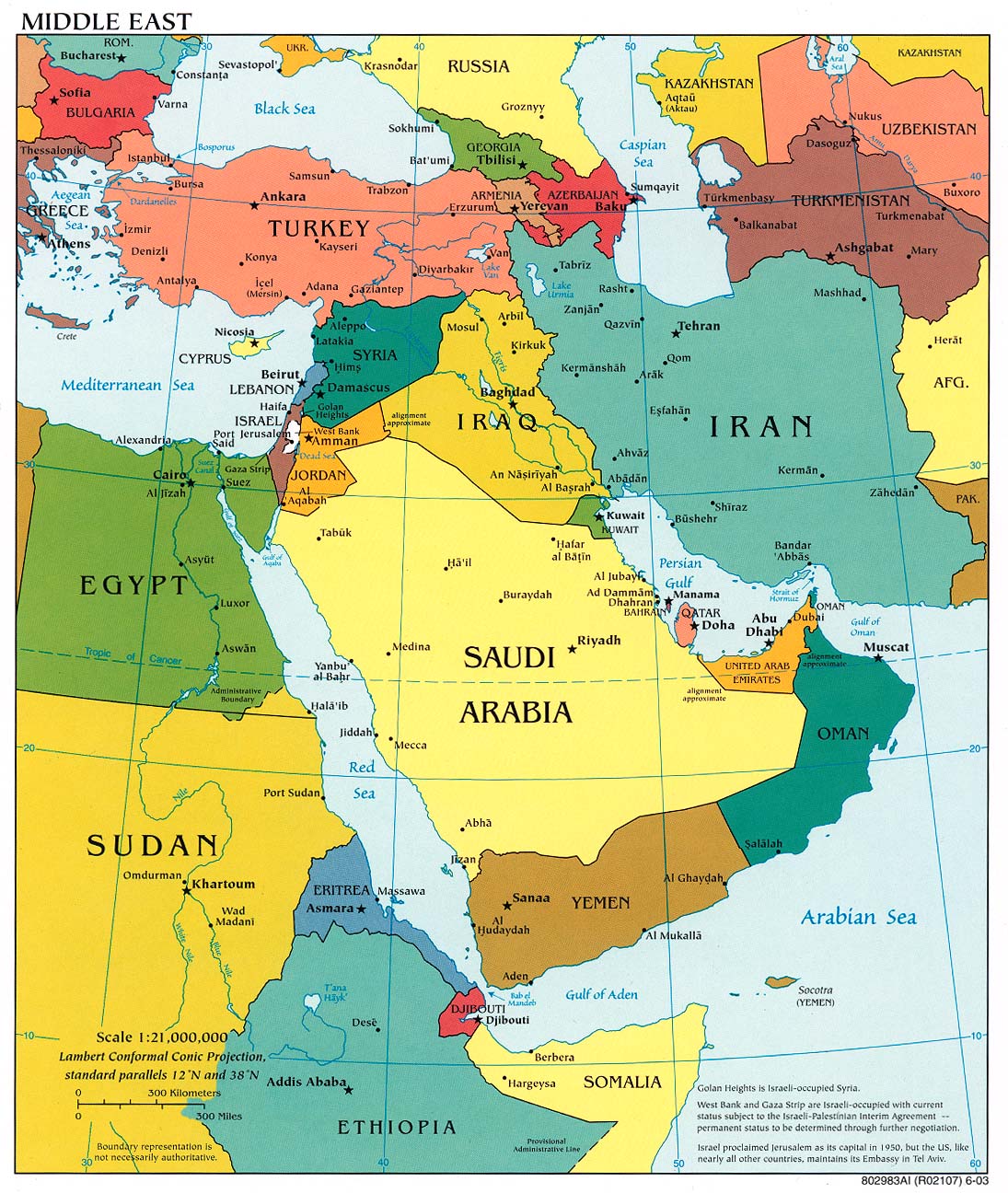
So, take Iran (map), a country which borders the former Soviet republics, Turkey and Pakistan, as well as Iraq and Afghanistan- not to mention its long coastline along the Persian gulf opposite the Emirates, Saudi Arabia and Oman, that opens out into the expanse of the Arabian sea (I write with a map open in front of me):

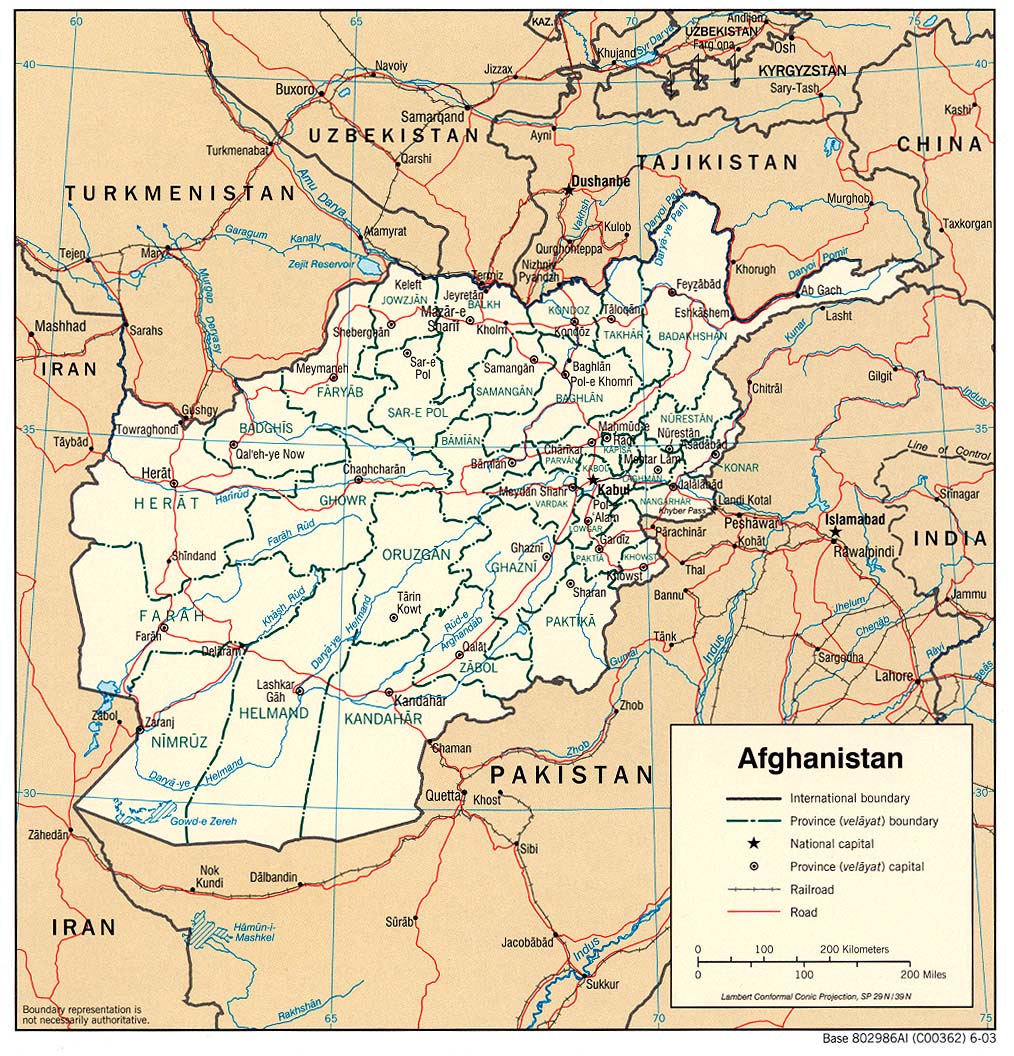
All I would point out is that the Al Qaeda terrorists had only two other real choices of countries to transit- assuming that they didn't want to stick out in leaving Afghanistan (map) by air- which were Pakistan or the former Soviet republics. Of these, Pakistan had relations with the US at the highest levels (these reached a crunch after Sept 11, but Pakistan's top levels could be described as broadly soft towards the West)- and Putin no doubt had intelligence tentacles a'plenty in the 'istans. Iran therefore makes perfect sense so far as transiting terrorists are concerned- which is not to mention Iran's radical Islam/pariah state status which seems a helpful circumstance too.

The other thing I would say is that for the enemies of GWB, proving him wrong over Iraq and therefore unfit to continue in his job after November is much more important than being right over Iran- since as Melanie points out they wouldn't be for confronting Iran anyway.

Hey, I said it was going to be obvious.


Couple of Nuggets.

Tim Blair names and shames the countries (the many countries) that condemned Israel's barrier in a UN vote. They include Britain, most shamefully as far as I am concerned. I think the Israeli courts were doing their business well and that Israel's right to self-protection should be paramount- as it reduces the need for self-defence.

I do hope Britain's vote had nothing to do with the common foreign policy of the EU, which the Beeb's Paul Reynolds said 'will not force the nation states to adopt a common policy on issues like Iraq.'. The operative word, I think, is 'force'. (incidentally, this is an article I'm going to fisk in the near future- it's pathetic)

*

This is interesting- a case where a British engineering company (already fingered by media reports on Oil-for-Food) admits that it may have received four million pounds beyond its normal commission payments from Iraq through the Oil-for-Food programme- and it doesn't know where the money went afterwards. Interestingly the market didn't like it and shares in Weir fell 3%. Of course it's only one case, but being British they are owning up to it. What about the rest? (via Friends of Saddam)

*

Oh, something else. Via Memri, the translation of an interview given by the Iraqi defence minister I mentioned recently. It accuses... yes, Iran, of substantial levels of infiltration into Iraq. I've already pointed out the BBC's reluctance to notice this.

Thursday, July 22, 2004


Key Findings- What Are They?

As if to illustrate my point below, the BBC's list of 'key findings' from the 9/11 Commission is instructive for the one, final, crucial point they make below the 'How It Happened' subheading.

This is that 'There was no operational link between al-Qaeda and ousted Iraqi President Saddam Hussein.'

I think this would surely be better put in terms that they had not uncovered an operation on which Al Qaeda had cooperated with Saddam (and to the pernickety it's also intriguing that it is put so starkly in relation to 'Saddam'. Do they mean that at the lower reaches of Saddam's regime there may have been such collaboration?). Certainly there ought to be another 'key point' in the BBC report, in fact there should be several, according to this report:

a)'The report... said Iraq had sporadic contacts with bin Laden's group in the years before the airborne assault on the World Trade Centre and Pentagon that left nearly 3000 people dead.'

and

b)'The panel's final report added a tantalising qualifier to a staff document last month that found no "collaborative relationship," suggesting at one point that Iraq may have offered to harbor al-Qaeda chief Osama bin Laden.'

At last! A definition of 'collaboration' that makes sense of all the equivocating about Iraq's ties with Al Qaeda: to 'collaborate' you not only have to offer to harbour the leader of Al Qaeda, he has to accept too.


From the interesting Eursoc: a summary of why all media should wear warning tags, not just the allegedly wacky ones who scare the life out of the moribund monoliths of the uber-media. They point out quite rightly that the established media's 'deep-set bias' has, for example, skewered the debate about the war in Iraq.

I think it's high time we got post-modern about this and insisted on the 'story-like' quality of the news agenda- where it all depends who's telling the story and why. The reason I say this is not because I think there isn't a reality to be accounted for, but because so many people in big media seem to see accounts of events simply as ways of projecting their own personal agenda. It's time to arm the public (in the UK) with a legal foundation for the scepticism they already feel- which might mean removing some of the legal foundations of the priviledges that media such as the BBC have historically enjoyed. In fact it's not just 'time', reform is way overdue.

Wednesday, July 21, 2004


Widening Horizons

Melanie Philips (back from a hiatus) does a great job with her appraisal of the Butler report and adds in the Senate report for good measure. She points out what I pointed out: that Butler backs the intelligence on Iraq far more than the press reported. It's the closest thing to my own analysis I've read- and with Melanie you get the reassuring feeling she's done her homework.

The New York Post covers the story of how Oil for Food money siphoned by Saddam is believed to be paying for terrorism in Iraq today. This seems to have come from newly released documents held by the Iraqi government. Jihad is an expensive business even if you have human 'bombs' to launch (via Friends of Saddam).

These two stories show I think the vital need for a broader and more interested look at the stories emerging from Iraq, and other places too.

Sanitised Politics

The complaint that people are disengaged from the political process is a common one. However, what's less commented on is the way the media tend to cleanse politics of all its abrasive qualities where it suits them. As one of the global 'mediators' of news, the BBC is one of the biggest culprits.

It's particularly suspicious in this case where Iraq is accusing Iran of misdoings. The Beeb's links with both Al Jazeera and the Foreign Office are well known. The Foreign Office's view of Iran as a potential ally is well known. So it's not surprising that the pattern of interference from Iran (as well as London-educated Assad's Syria) has been played down or ignored by the BBC.

According to Iraq's Defence Minister (reported by the Washington Times) speaking to a Saudi newspaper,

"The Iranian infiltration is wide and unprecedented since the founding of the Iraqi state"

Meanwhile, down in BBCOnline's own sleepy hollow, it is reported that 'Iraq seeks border security boost'.

Well, you could put it that way, at the danger of losing interest in Iraqi concerns altogether. The Beeb gets the story inside out and back to front when they say

'Both Iraq and the US have accused Syria and Iran of failing to prevent Islamic militants crossing into the country to stage attacks.'

In fact it's clear from the Times report and other reports that the real Iraqi concerns are about active Iranian interventions in Iraq- rather than passive lack of assistance. Active interference that the media has chosen to ignore- lke this. This means not just terrorists being let in but state agents sent. As the Defence Minister says:

"The Iranians infiltrated the various departments of the state in general and have set up intelligence and security centers in several Iraqi cities."

So, once again we discover that underinformation becomes misinformation, on this occasion strangely coincident with a British political interest in not annoying Iran.

Tuesday, July 20, 2004


BBC's Big Government Love-in

It's only to be expected that the BBC will suck up to the multilateralists, the transnationalists, of this world. How reassuring for a vast state-funded bureaucratic media edifice to put its trust in people committed to the kind of world which will always have a place for the BBC (they've already begun to help fund it, after all).

Today the European Parliament opened after its little (not to say puny) exercise in democracy (not that it has much power- a fact not pointed out by the Beeb). For the BBC this was 'historic', the 'big day', a day of 'joy' and 'light'. The only bad fairy to appear was a French Communist (boo, hiss) called Wurz who said that Europe had become rather grey. No mention of the eurosceptics who did so well in the election, and only the most oblique mention of the poor turnouts that reduced the elections in Eastern Europe (supposedly the reason why the day was historic) to something approaching farce. Even Wurz's note of 'realism' was found to be centred on the supposed spread of the 'liberal market' and the European fringe's support for the GWB's Gulf war.

In other words, the BBC's fantasy bubble glistened brightly in the Strasbourg sunshine. On days like this they can brush away apathy, shrug off the eurosceptics, dismiss the farce of a Parliamentary President elected by nudge-nudge, wink-wink, and bask in the sheer bigness of their transnational dreams.

Meanwhile, over the other side of the Atlantic, another transnational dream is being polished- the 'fabulous' duo of Kerry and Edwards.

It's as if the BBC writer, 'Quivering' Jill Mcgivering (yes, her voice does sound as though she's got a bit cold in the swimming pool), were determined to fill her page with as many positive adjectives as she could about Kerry-Edwards, while trying to make it look as though she was scrutinising them. Consequently, Kerry is 'more' of this or that than Edwards, and Edwards is 'more' of that or this. But it's all good: between them they're 'methodical', 'careful', 'systematic', 'ambitious', 'visionary', 'impressive', 'uncompromising' while remaining 'idealist', 'thoughful' 'cautious' and 'radical'.

Yes, all of those and many, many more are implausibly attributed to Kerry and Edwards because they are, according to Jill, opposites. Cunning old Jill.

No mention in describing Kerry's 'impressive record' of flip-flop Kerry, the antiwar Vietnam hero who's supported without supporting the Iraq war- and much else too in a similar vein. No mention of Edwards' means of making his fortune by chasing ambulances. And no, I do not want a report to be filled with detractors of the, ahem, dynamic duo. One single critical voice would have been a relief, before the Beeb plumbed the depths of their free advertising for leftist transnationalists.

One like this, for instance.

Monday, July 19, 2004


Pride of Place to Arthur Chrenkoff amongst the three latest blogs I've added to my blogroll. After at least a minute's thought I decided to put Chrenkoff under my 'News' section. Many are called, but few are chosen. Also amongst the elect are Laban Tall and the gentleman from God Save the Queen.

Actually Chrenkoff must be feeling quite good about himself- and not just because he's now linked to this blog. Maybe this would even rank a bit higher in his list of achievements.


So I goes all round the internet (well, nearly) and I finds that the bestest response to Lord Butler comes from an Iraqi.

It's heartening, in a way, that Mohammed and co. put such a lot of store by what some British toff says, and of course every story like this one makes the BBC look good since they seem to be the source of choice for most of the Middle East (there's a darker side to that, too). roger simon says 'Some day I'd like to go to Iraq and meet these guys.'- me too.

I had a thought or two about Butler as well.

You'll doubtless have noted the diminution of hysterical press coverage and infer rightly from that that the journos have begun to read Lord Butler's report. If Butler's enquiry were a game of chess it would be a winning stalemate for Blair. Why so generous? Perhaps Butler felt Blair had had the courage (and it took courage to take on the BBC et al) to confront the poor strategy of the past and didn't need reminding of the real errors therein.

The reason for the low-level intelligence Butler so mildy chastises was that we were relying until 1998 on UNscom and from 2002 on UNmovic, and by 2002 we were, predictably, panicking as a black informationless hole opened up in between those years- in a spin-controlled sort of way. We had discovered we couldn't on the one hand support an above-board inspections process and on the other try to infiltrate the Iraqi regime at high levels (The CIA tried and spectacularly failed to engineer a coup d'etat- and seemingly the Brits were more dovish and hopeful Saddam would disappear in a puff of smoke, and that nanny would kiss it better and...). This meant we were in the dark about the many levels of secrecy at which the regime operated.

This is not what Butler says- which is the element of whitewash in his report. He never examines the longer-term political strategy concerning Iraq, terrorism and WMD throughout the lazy 'Tory sleaze-things can only get better' nineties which had brought us to the point of well-founded suspicion, but next to no certainty.

Anyway, if our media team has been skittled out by Butler and the political pressure-cooker, the Weekly Standard team have been going into bat- and by my reckoning have piled up tons of runs. Not bad for a country for whom it's never been cricket.

ps. I will talk about other stuff- soon. I go wherever seems right at the time and at the moment that's just here.

Sunday, July 18, 2004


Hadn't Much Time to look at the web today (and I'm having trouble with my provider too), but I found it interesting to find LGF debating the Telegraph. The Telegraph has becme fairly unpredictable and sometimes untrustworthy lately.

The subject highlighted was Iranian links to Al Qaeda; the report was that Iran let most of the 9/11 terrorists pass through their country unchallenged from Afghanistan. That scenario doesn't sound much of a revelation to me- in fact it seems fairly predictable. It doesn't seem a big deal for a radical Islamic state to let Islamic terrorists go on their way to do their worst in the West. Even though Shias and Sunnis frequently blame each other for the low state of Islamic culture they can hold their noses well enough when it suits them.

Saturday, July 17, 2004


I Love the Internet

To be specific, one of the things I love is the way bloggers hover like vultures around a story, often pecking with far more vigour than the big media offers, and then suddenly there's a breakthrough and a spectacular finale (you might say, 'the kill'). That seems to have happened with the Joe Wilson affair- and I think Mark Steyn is rapidly acquiring honorary blogger status. There's something of the spirit of blog about him- and this time it's really moving (via Glenn):

'Saddam wanted yellowcake for one reason: to strike at his neighbors in the region, and beyond that at Britain, America and his other enemies. In other words, he wanted the uranium in order to kill you.'

He's never been more tabloid; but I like it.

*

Just to make my position on the Butler report clear (and I'm referring, as before, to the Iraq section)- I don't believe what I'm hearing from the vast majority of journalists: Butler did find a great deal he was satisfied with in terms of analysis of intelligence and judgements arising from it. The number of approving remarks Butler makes about key assessments and judgements concerning Saddam, his intentions, threat and capability, suggests strongly he is satisfied with the overall approach. I don't buy the 'devil in the detail' view point, because the details Butler takes issue with are no more significant than the details (the overwhelming number) where he agrees with what was done.

The problem seems to have been that to know exactly what was there and where required the kind of infiltration at high levels that we'd given up hope of when relying on UNscom. After that, without hope of in depth revelations we were dependent on a handful of mid-level contacts, overhead photos, and the rest was guesstimation. The problem was not dodgy contacts, bad analysis, or false conclusions- the problem was our reliance on Unscom and the blindness that resulted when UNscom left in '98 (which is not to say that Butler disapproves of Unscom- he said it had been largely effective in restraining Saddam. As a strategy for dealing with a murderous dictator's WMD ambitions though, 'largely effective' would have been a very worrisome situation- and I think Butler recognises that.)

*

Another reason to question our late '90s strategy is outlined in this World Magazine article about Unscam. It's a good summary of where we have got to in the saga- and I think that fears about Saddam's resurgence in the '90s were fuelled by the success he made out of Oil-for-Food - success for himself that is, not the Iraqi people (via Friends of Saddam).

Friday, July 16, 2004


Paul Reynolds has been, as they say, 'all over' the Butler report. His several analyses have, however, in my view been selective and used to enforce a simple thesis: that Butler in his unaccusatory judgements just wished to soften the blow on British Intelligence which fell so heavily on the CIA from the Senate report.

Although Reynolds suggests that the Senate 'loves criticising agencies of the government', he does not mean that the Senate's criticism may have been exaggerated (a product of the hothouse perhaps). Quite the opposite- for Reynolds it is the Butler report that has been too weak in its criticisms.

According to Reynolds, the British report was 'loathe to criticise' and 'cautious', whereas the US report was 'decisive'. For him, the task is to 'decode' the Butler report.

On this occasion, weirdly, American values appear to have won the BBC's heart!

As a sidelight to this, guess who was popping up on BBConline with his response to Butler? None other than Gregory Dyke, no doubt as bitter as Ray Parlour's (ex-)wife to have walked away with only approaching half a million pounds. And, needless to say, the Beeb's latest enthusiasm (in both NewsNight and BBC News contexts) has been the supposed 'underpinning' piece of intelligence, which was withdrawn- guess when- in July 03, just as Hutton was conducting his investigation into Gilligan's claims about the 'dodgy' dossier (and Dr Kelly's death, too).

As an indication of Reynolds' analysis, compare Reynolds' and Butler's view of intelligence sources in Iraq:

Reynolds: 'It turns out that human sources used by the Secret Intelligence Service (SIS) were unreliable'

Butler: 'Of the two dominant sources, the first reported accurately and authoritatively on some key issues... the second dominant source remains the subject of continuing SIS validation.'

(Reynolds' quote taken from his article 'The Devil Is In The Detail')

Not jumping to any conclusions then, are we Paul?

Actually, contrary to Reynolds' assessment, the report is full of affirmations that the assessments of the intelligence services were professional and circumspect, with only occasional exceptions.

From my reading of the report, I would offer an alternative thesis: that Butler's criticisms are mild because it was never intended that he should critique the real problem- the lack of an aggressive and detailed strategy to effectively infiltrate Saddam's regime prior to 9/11 and in the months afterwards (which is no longer relevant now that we have taken the ultimate necessary action).[Update: I should stop tinkering with what I've said here! Obviously after 9/11 infiltrating Saddam's regime would have been much harder. However, between 1998- when UNscom left- and 2001 we had little inside information. This leaves the previous wholehearted UNscom strategy open to question, as well as the period '98- 01.]

The purpose of Butler was to offer something to the Paul Reynolds's of this world as a way of saying 'look, we've had an enquiry and... etc... yawn- let's go and beat the Tories.'

Thursday, July 15, 2004


Standing Up; Being Counted.

Claudia Rosett's recent testimony to Congress on Unscam was excellent, and just a bit moving- judging from the text ( via Friends of Saddam).


Should've said yesterday: Mark Steyn had a great way to celebrate Bastille day. Truly, a man after my own heart who would like to rain on their parade (sadly, it was sunny).

Wednesday, July 14, 2004


Well, Butler didn't really say very much, did he? (I've only scanned the report, but I've seen the man's public pronouncements and heard a bit more since.) Whatever he said that seemed to trap Tony Blair or his Government (no real sharp intakes of breath- so different to Hutton) was followed with a wry smile by some kind of escape route for those concerned- and no-one was to blame.

I think Tony Blair chose his men deliberately (but fairly) when he selected Hutton and Butler.

The BBC's favoured approach in reporting Butler's view of the intelligence has been been to emphasize its 'serious flaws' and that it was 'unreliable'- yet the fact that Butler denied any individual responsibility indicates that no-one either fabricated or was notoriously incompetent. This has to mean that the intelligence was not so flawed as all that, otherwise how bad does it have to be before someone is to blame?

One of the important things Butler said was that the claim that Saddam sought uranium from Niger was based on good intelligence ie. he believes it happened. I am sure that one fact- that our expert opinion believes that Saddam was clandestinely seeking materials for nuclear purposes under the nose of the IAEA- would be a clincher for many people if it were put to them directly (Belgravia Despatch has more- and cites Butler specifically- via Glenn).

Contrasting Butler's findings with those of the Hutton enquiry I'd say that in the case of Gilligan we have someone claiming a fabrication of evidence- which was found to be categorically untrue. In the Butler report we find a number of assertions that were not fabricated but were inadequately contextualised- but they were consistent with the thesis that Saddam was seeking offensive weaponry and capabilities. The intelligence, and the politician's expression of it, doesn't match the reality we know at present, but it isn't inconsistent with a general thesis we know to have been true and which justified strong action against Iraq. So, Gilligan lied (and so have the 'stoppers') and our politicians aren't as competent as we would like, but we live in a democracy- Hutton and Butler in a nutshell.

And that's ok- but I wouldn't want to leave it there. It will take more than generally about roughly right to win a war on terror- and I think the establishment hasn't woken up to that yet. On the other hand, how much more sleepy would they have had to have been if they hadn't followed up their threats against Saddam's regime? Frighteningly so it seems to me.

Elsewhere...

Brownie at Harry's Place has a simple conclusion to make (but others dissent). Norm likes what he hears from Tony Blair- and so, in fact, do I.


Butler Today.

This discussion of his dilemmas gave me a good head start (via Samizdata)

 
Google Custom Search